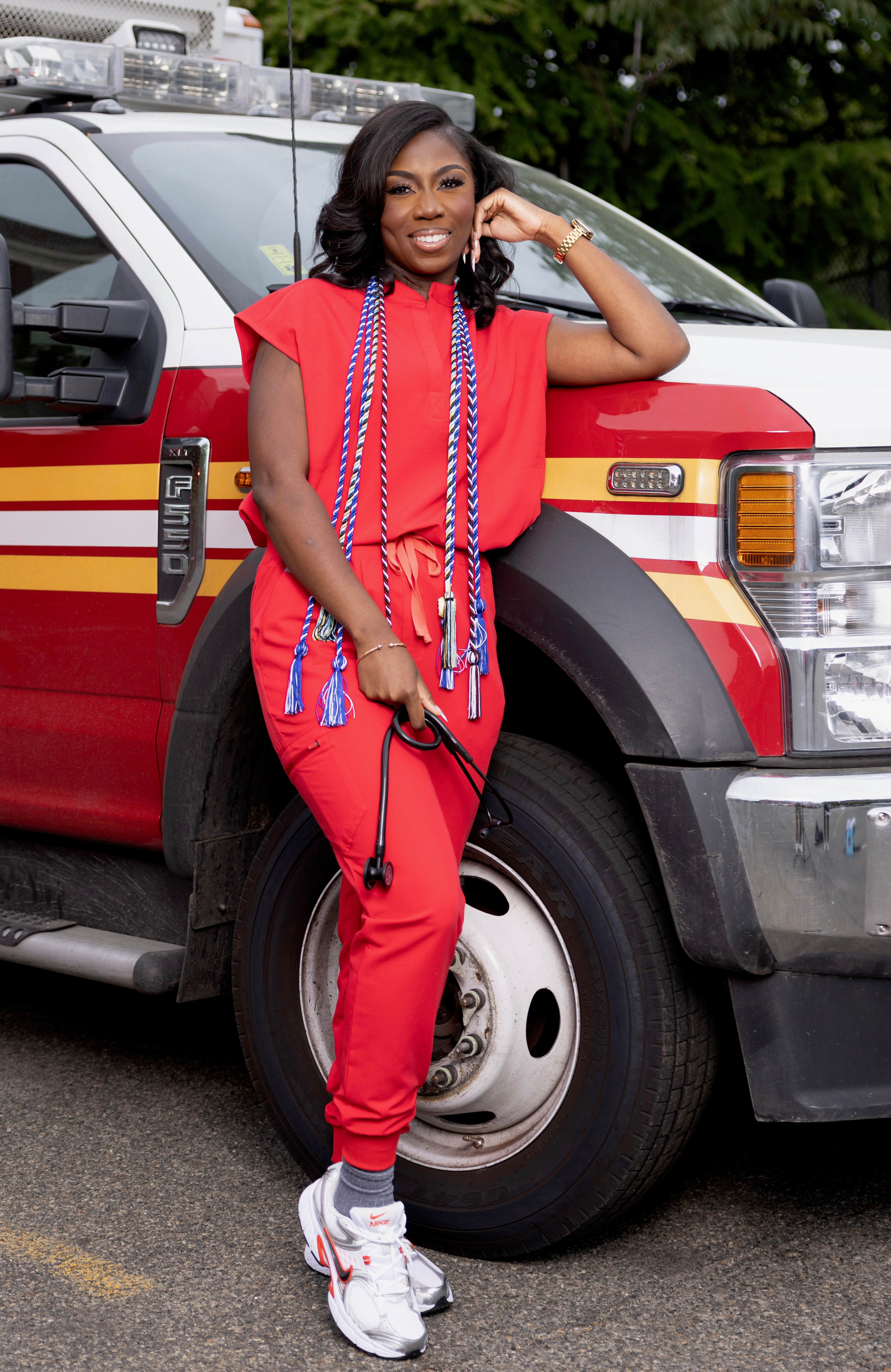
Shanelle Lee
Central Carolina Technical College
"It’s kind of mind-blowing to think how one small decision to invest in myself led to other people choosing to invest in me as well."
“My friend always says that when I was a corrections officer, I was mean,” Shanelle laughs now.
But the truth behind that observation is more complicated – and it’s what eventually led Shanelle out of a career that required her to be someone she wasn’t, and into one rooted in leadership and care for people during their most vulnerable moments.
Where did your career journey start?
I originally wanted to be a lawyer, so I majored in criminal justice at SUNY Morrisville, near my home in Brooklyn. But after an internship at the district attorney’s office, I realized that I didn’t want to be a lawyer anymore.
I needed to start working so my mom encouraged me to take the city exam for corrections. And you do what mom says, right?! So I worked in corrections in New York for six years.
What was that season of your life like?
I didn’t realize at the time that I was doing work that wasn’t natural to my personality until my friend pointed it out. She said, “I’ve always known you to be this nice, loving, caring person. And then you go into corrections, and you get mean.”
My very first interaction with an aggressive inmate took place soon after I graduated from the academy. I was walking through the halls, greeting everyone – just being the bubbly person that I am. And this one inmate cursed me clean out. I think that’s when I realized that being a soft person in that hostile environment wasn’t going to work for me.
Fast forward a little bit, and my supervisor moved me to a facility that housed 18- to 21-year-olds. It was a structured program where I worked alongside case workers, medical staff, and site practitioners to do well-rounded rehabilitation – what prison should be.
So I made the shift from that rough, correctional mindset with aggressive adult inmates to helping these “kids,” as I called them, learn how to wash their clothes, clean up behind themselves, and express their feelings in a healthy way instead of using their hands to lash out.
There was a moment working with that population that stayed with you – one that was uncomfortable, middle-of-the-night, and deeply human.
One early morning – I was working overtime, it was around 1 am – I walked past a kid’s cell, and it smelled horrible. I said, “Hey, why does this smell so bad? You don’t need to be in a cell that stinks. Since we’re both awake, let’s get a mop, bucket, and broom and clean up this house tonight.”
That’s when he confided in me something he was too afraid to tell anyone else: he wore diapers. He didn’t want to throw them in the regular trash, where others might find out, so he stored them under his bed. Turns out, he was raped as a kid. He didn’t have control of his bowels, so that’s where the diapers came in.
In hindsight, I see how that experience was drawing me away from the care-custody-control mentality of corrections and towards the gentler, compassionate work of nursing.
A move to South Carolina also gave you the opportunity to start fresh. Tell us about that.
My husband is in the Air Force, and he was being stationed in Sumter, so it was the perfect time for me to make the switch to nursing. When I reached out to USC – because it was the only school I knew of down here – they recommended that I start at my local technical college. So I applied to Central Carolina, thinking, Why wouldn’t they pick me?
I found out very quickly why – because the application pool was highly competitive, and there were lots of other people who already had medical backgrounds or more experience on their resumes.
But I didn’t let that stop me. I reached out and got placed on the waitlist.
In the meantime, I started looking at other programs. About a week later, I got a call: a seat had opened up – did I still want it? “Absolutely!”
Yay! What did support actually look like once you were there?
Oh yes! Central was concerned about me as a whole individual – not just my academics.
For instance, I have hearing loss in both of my ears. Things like leaves crunching in autumn or rain falling are dead silence for me – and that affected my ability to use a stethoscope. An instructor connected me with the right person to get adaptive pieces compatible with my hearing aids.
Central also hosted little meet-and-greets – kind of like speed dating, but not romantic. That’s how I met one of my closest friends. She’s from California, and we bonded over the fact that we were both in a new space trying to figure out life together.
And all of my instructors said, “If you need help with anything, let us know. If we don’t have the answers, we can find someone who does.” I found out pretty quickly that they actually meant it.
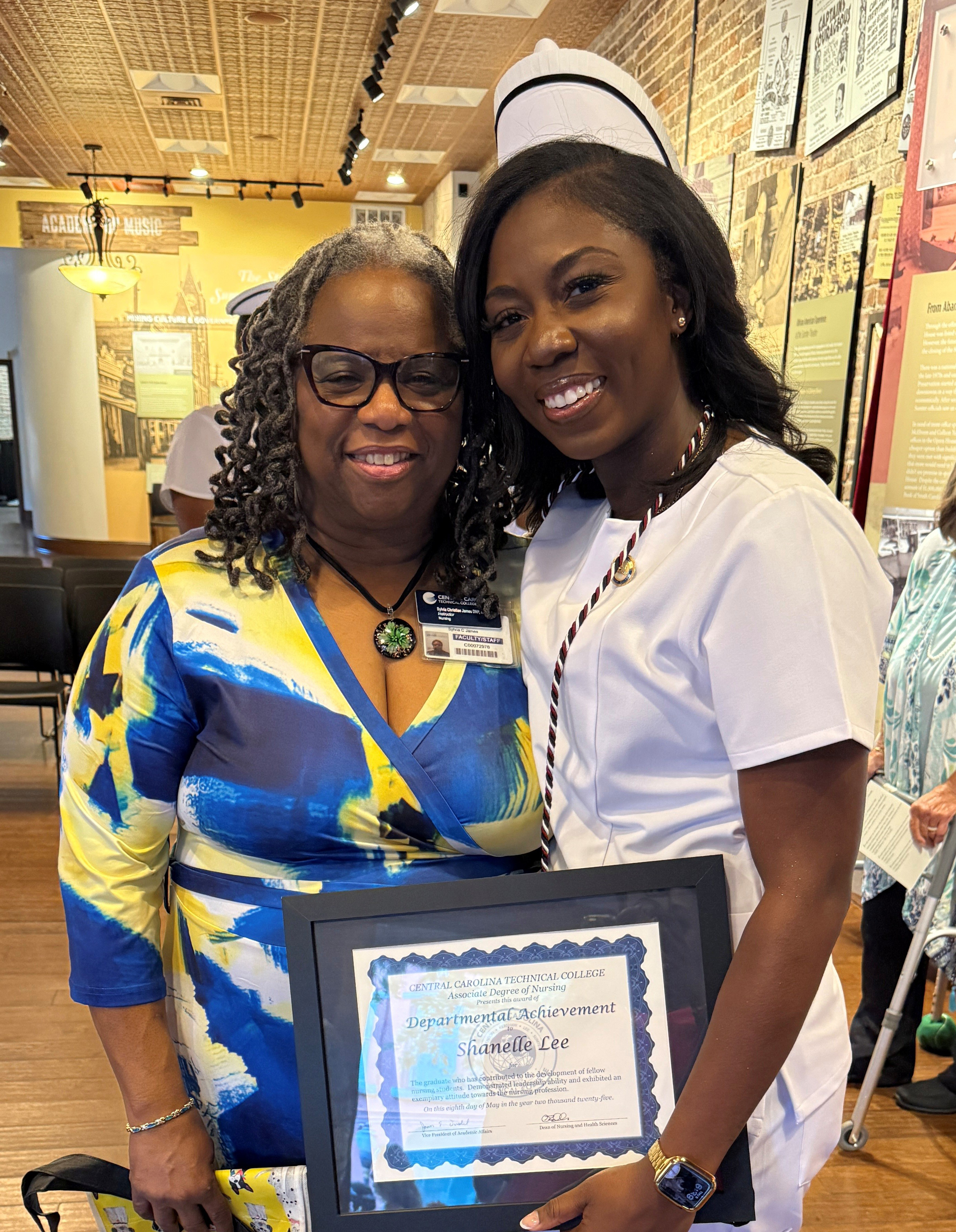
It sounds like being in a supportive environment made you more open to new possibilities – and that’s when leadership showed up.
I think I just became willing to try things – especially when someone believed in me.
Take, for instance, the state Student Nurses Association Convention. I didn’t think I had time for it, but one of my instructors said, “Just go and see what it’s like.” I’m glad she kept nudging me to try it. It’s like she saw something in me that I wasn’t seeing in myself.
That’s where I met a nurse from the Department of Juvenile Justice, and for the first time, I saw how nursing and corrections could intersect. Our conversation led to a student internship – and felt like a way to honor my past experience while moving into something new.
I also talked with other nursing students from across South Carolina and put my name forward for a leadership position focused on community service. Instead, I was voted in as President-Elect – a role I hadn’t even imagined for myself.
It’s like you went in hoping to serve – and came out being asked to lead.
Exactly. Those leadership roles took me to conferences across the country – in Orlando, Louisville, Seattle – where I saw just how far-reaching and impactful this work could be.
So I just kept signing myself up for stuff, and now I’m on the National Student Association Board, helping plan its annual convention, which will take place in April.
Sometimes I take a step back, look at the full picture, and think, If I didn’t go to Central, I may not have had these opportunities. It’s kind of mind-blowing to think how one small decision to invest in myself led to other people choosing to invest in me as well. I’m super grateful for that.